Sinister War

Sinister War

One for the big-time Marvel fanboys.

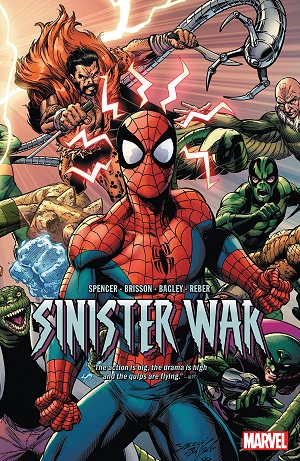
Basically we have Spider-Man here taking on nearly every enemy he’s ever had. Or, as he puts it, it’s “a battle royal with every single baddie who’s ever looked at me sideways.” Some of these I had never heard of. Who was this Morlun guy? He seemed important. What’s with the yellow lizard? I had to do a search to find out he’s called the Dragon King. I never did figure out what his super powers were. There are so many villains on parade that sometimes they just have to be introduced as the teams they’re a part of: the Sinister Six, the Savage Six, the Sinister Syndicate, the Superior Foes, etc. They come flying off of splash pages so filled with figures they don’t even register as individuals. But at the end of the day, as with most battle royals, they end of spending most of their time just milling around in the background.

The guy behind all of this is Kindred, and if you don’t know who he is then I don’t have time to fill you in because it’s complicated. Really complicated. Basically he’s a supernatural figure with demonic powers, including the ability to send centipedes into people’s ears and control their minds, sort of like the slugs in Star Trek II: The Wrath of Khan. Kindred has assembled this all-star team of supervillains (even raising some of them from the dead) to make Spider-Man pay for his sins. Or something. They all go along with it because they think Kindred has the power to send them to hell. I don’t know if Kindred can actually do this. I also don’t know what sort of hell it is we’re talking about. There’s talk of souls and punishment and the like, but there’s no theological content to any of it. It’s just another part of the multiverse I think.

The four-part series collected here was the culmination of a longer story arc by Nick Spencer. At the end they collect some of the teasers from previous issues that helped set things up (but shouldn’t these have been part of a prologue?), and the story went on from here as well, so it’s really all quite confusing unless you’ve been following along pretty closely. Which I hadn’t.

There was too much going on. Which is too bad because I liked the main story arc, which has Doctor Octopus again cast in the anti-hero mold. He’s the one who takes down Kindred at the end, using science. Spider-Man is mainly just a punching bag throughout, only being spared when the bad guys start fighting each other. (Why Kindred didn’t see that was going to happen when he set things up as a competition to kill Spider-Man, I’m not sure.) I didn’t like Mephisto being involved because that only increased the confusion as to what was actually happening. That confusion also had the effect of watering down all the psychodrama involving the Osborn family, which I didn’t understand anyway.

I think this is a problem with the current era of Marvel comics (and the MCU) generally: an inflation in the roster rolls and an increase in complexity that caters to a readership expected to be up on more and more information regarding backstories and different timelines. So if you’re just coming in here, good luck!

Graphicalex

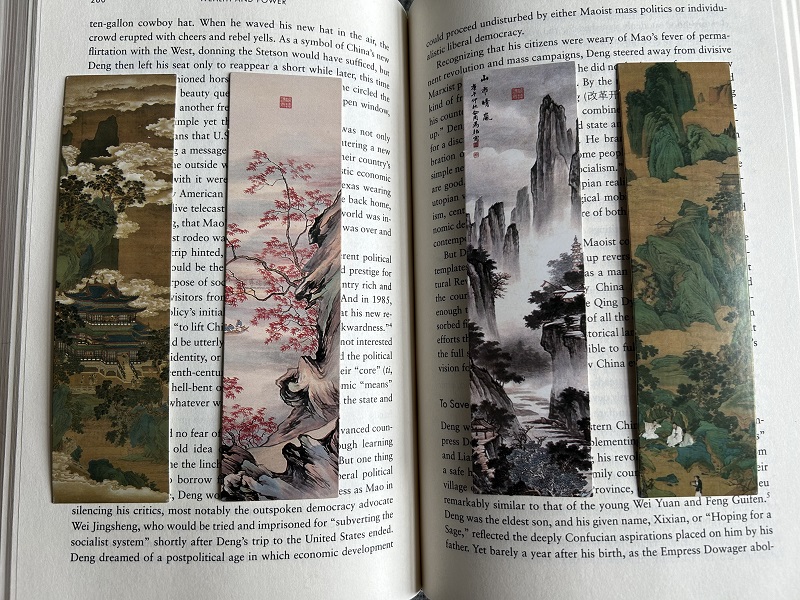
Bookmarked! #140: The China Set

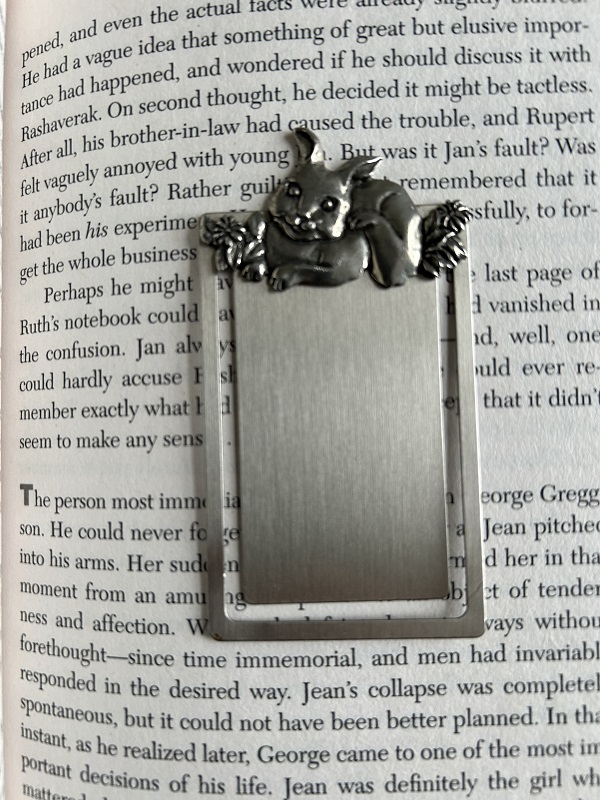
These are four bookmarks from a set of 30. There are a lot of sets sold like this and if you like the particular theme (I have sets of old maps and paintings by Van Gogh) I think they’re pretty nice.

Book: Wealth and Power: China’s Long March to the Twenty-First Century by Orville Schell and John Delury

Bookmarked Bookmarks

Wimsey: The Entertaining Episode of the Article in Question

A short and silly story that has Lord Peter foiling a diamond heist. The tip-off comes as a result of his “persistent and undignified inquisitiveness,” a character trait described in the intro. Detectives, even amateurs, are just nosey people.

While in a Paris train station Lord P eavesdrops on a conversation, and this is what leads to his capture of the pair of jewel thieves. What gives them away is a grammatical error that you’d have to know French to pick up on as the conversation isn’t translated. Hint: the title of the story is a pun on “article.” Then, after they’re apprehended, they’ll slip into “a torrent of apache language which nobody, fortunately, had French enough to understand.” This is another reference, so common in Sayers, that contemporary readers might not get. Les Apaches were criminal gangs in Paris in the early twentieth century.

I call the story silly because one would have thought there was a more obvious tell for Lord Peter (and everyone else) to pick up on than the article in question. Jacques Sans-culotte dresses up well, but his ankles give him away.

Wimsey index

What happened to YouTube? Part 4

OK, something is definitely going on here. I’ve previously posted on how long the ads are getting on YouTube, most recently just a couple of days ago in response to having a 28-minute ad dropped into an interview I was watching. Today I had a 31:15 ad in one podcast and then just a bit later on a different podcast getting a 40:37 bomb dropped.

What is the point of this? Nobody is going to watch a 30 or 40-minute ad or infomercial or entirely separate podcast inserted into the podcast they’re watching. Nobody. But given how frequently these things are popping up now it’s clearly part of a conscious decision YouTube is making. Meanwhile, why would somebody even be making these half-hour ads? They must know they just play as aggravating.

I guess somebody is looking at the data and figuring that somehow it works, but I can’t see it. The platform does seem to be transforming into something new though, even if I’m not sure what the endgame is.

Mountain melt VI: The very end of snow mountain

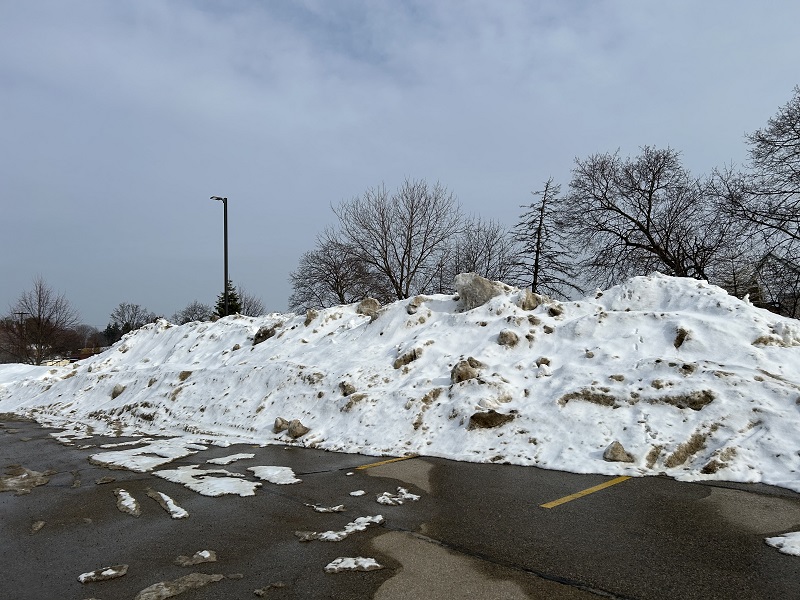
This was definitely the end of the line, as we’ve had a lot of rain mixed with warm weather. It’s all that was left of snow mountain a couple of weeks ago.

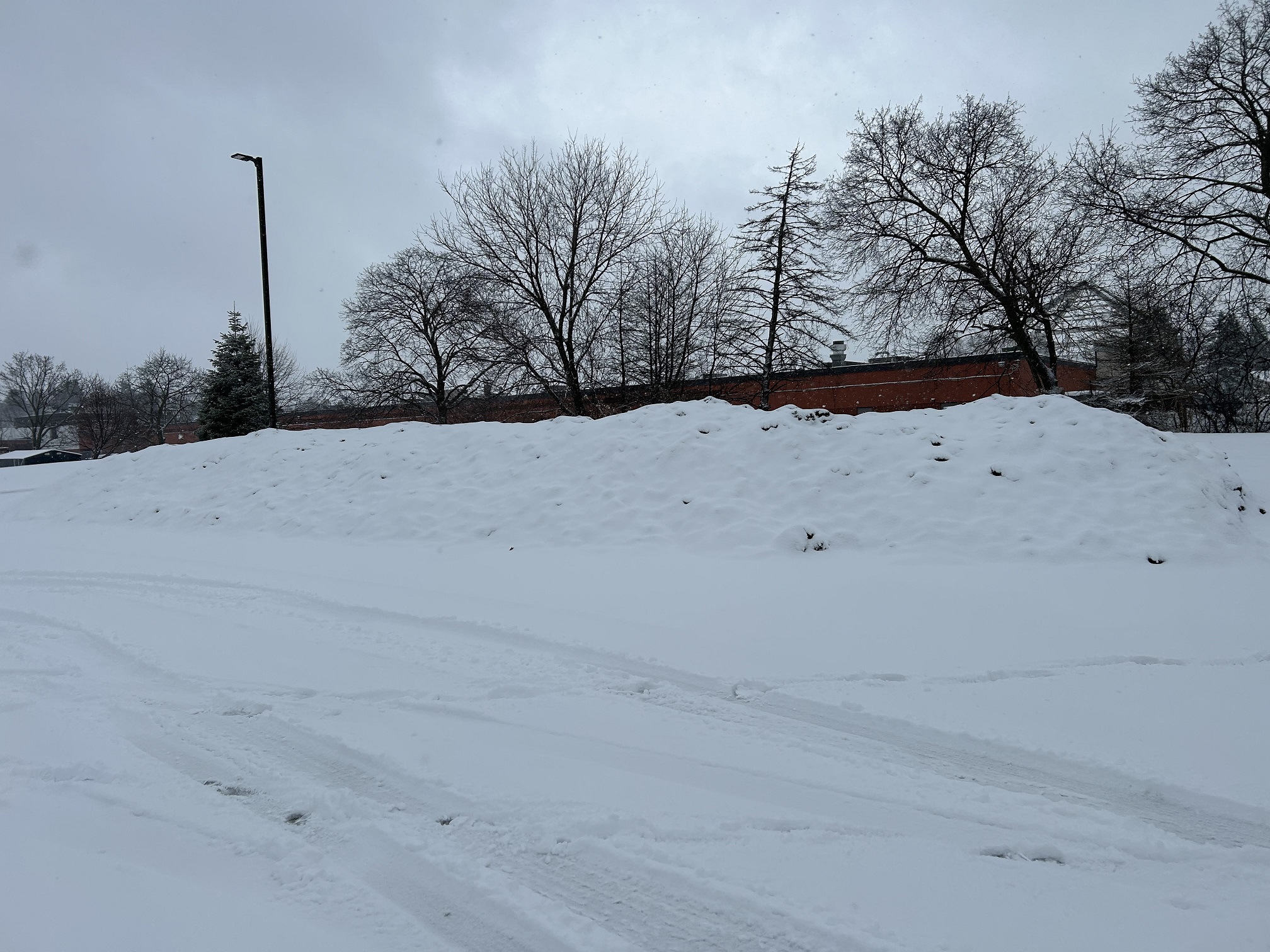
For those of you interested in a recap, here are the mountain melt pictures in order.

And here is what it looked like yesterday.

This is a bonus pic, by request, of a different parking lot but with the clean-up crew getting rid of some of the dirt left behind by another snow pile.

That’s a wrap! It was a snow winter but it’s all gone now. The heat is on.

Archer: Gone Girl

I’ve been reading the Macdonald’s Lew Archer stories in the collection The Archer Files edited by Tom Nolan. In a prefatory note to the reader for “Gone Girl” Nolan explains how it incorporates some elements from the story “Strangers in Town,” which remained unpublished in his lifetime (“Strangers in Town” was also expanded into the novel The Ivory Grin). This is fine, but the note doesn’t explain why Nolan (I assume it was him) changed the title. “Gone Girl” was first published in 1953 under the title “The Imaginary Blonde.” Why is it “Gone Girl” here? Because The Archer Files came out in 2015 and Gillian Flynn’s novel of the same name had been published in 2012 and the movie released in 2014? I guess. That seems kind of cheesy to me though, and personally I prefer “The Imaginary Blonde” anyway.

Given how Macdonald mined his own material I wasn’t surprised at how familiar it played. And it was interesting to note how he held on to stuff. I noted in my review of “Strangers in Town” the description of the gangster’s eyes looking “like thin stab-wounds filled with watery blood,” which he cuts and pastes here. I can’t remember though if sand “drifted like unthawing snow” was used previously. Sand as snow is good but unexceptional; it’s the awkward rightness of “unthawing” that really lands. If you look unthaw up in a dictionary it’s synonymous with thaw, but that’s not how it’s being used here. The sand is snow that will never thaw because it can’t. It’s sand! I love it.

Archer index

What happened to YouTube? Part 3

In January 2024 I wrote a post complaining about an ad that appeared on YouTube that was 8:30 long. Then, just a couple of weeks ago I had to give an update where I mentioned being bombed by an ad that was 17:21! Of course I didn’t watch it all, but it still shocked me.

Well, it didn’t take YouTube long to one-up itself. Last night I watched a short, 17-minute video of an interview with an economist and just a few minutes before the end the algorithm or whatever tagged me with an ad that . . . wait for it . . . clocked in at 28:46! Holy enshittification!

I take it this is all just YouTube saying you will subscribe to YouTube and pay to get the ad-free version or else! But the thing is, you can get ad blockers now that will, I’m told, stop most of this stuff from getting through. As I said in 2024 though, the effect of running these kinds of ads isn’t just an irritation, it’s just saying that this is what the platform is now. Can you imagine network or cable television trying to get away with this? But YouTube knows they can, and if they can get away with it they’re going to keep doing it. So I’ll keep letting you know about the new records they set. As if AI slop wasn’t bad enough!

Archer: Strangers in Town

First some quick background. “Strangers in Town” was written in 1950, with Macdonald planning to submit it to Ellery Queen’s Mystery Magazine. He withdrew it, however, so that he could expand it into a novel, which turned out to be The Ivory Grin. He also recycled parts of it into the story “Gone Girl.” The original story itself was only published posthumously in 2001 when his biographer, Tom Nolan, discovered it among Macdonald’s papers.

Judged on its own it’s a pretty good story. Things start off with a woman coming to Archer to see if he can clear her son of a murder rap. He’s Black, you see, the victim is a white woman, and things don’t look good. Then there are some of the usual elements, like the way the murder investigation turns into a missing person case, and the trip to the big house where Archer gets roughed up by a powerful figure who doesn’t like him snooping around. Archer again moves quickly (the case only takes about 24 hours of frantic driving back and forth) with the action culminating in a rush of information at the end where you have to force yourself to slow down to make sure it all makes sense.

You can see why Macdonald thought there was more in it though. We don’t get to know the characters as well as we feel we should (Dr. Benning in particular), and what we’re mainly left with are descriptive flourishes such as the elderly gangster’s two day’s beard having the appearance of “motheaten gray plush” and his eyes looking “like thin stab-wounds filled with watery blood.” Who needs the movies with writing like that?

Archer index